


In a recent post I discussed the historical evidence of the skin complexion of the ancient Jews to determine the color of skin Jesus Christ would have had.1)See Heath Henning, “What Skin Color was Jesus Christ,” August 3, 2020; https://truthwatchers.com/what-skin-color-was-jesus-christ/ It has become necessary to revisit this question due to the response I have received, particularly from those who advocate that Christ was black. In personal correspondences I have received a large number of sources to examine claiming Jesus was black. My original post was straight forward, I simply identified ancient historical text that mentioned specifically the skin color of people from Mesopotamia as well as Jews. After scrutinize many of these sources promoting the thought that Jesus was black, I noted a number of faulty concepts behind the biased driven conclusion.
First, only two primary sources have been provided that bear direct relevance to the skin color of Jesus. Revelation 1:14-15 was referenced to me in an email as well as on the majority of websites presenting this idea. The passage states, “His head and his hairs were white like wool, as white as snow; and his eyes were as a flame of fire; and his feet like unto fine brass, as if they burned in a furnace; and his voice as the sound of many waters.” This is the primary biblical support for the black Jesus idea, but it ignores the first portion of this passage about His head being white. The statement that His feet were as brass, or as it is commonly presented as “bronze” is supposedly the clearest evidence that Jesus was black. Oddly, the full clause including the brass color “as if they burned in a furnace” is always excluded from this quote. This is not depicting Christ as bronze or brownish, but glowing brightly consistent with the fiery imagery of His eyes as well as in verse 16 which concludes this descriptive imagery with “his countenance was as the sun shineth in his strength.” This description is further alluding to Old Testament eschatological passages of the Lord judging in the end days depicting “burning coals went forth at his feet” (Habakkuk 3:5).
Concerning this passage commentators state, “His feet seem to be clad in brass boots, still glistening white hot from the furnace.”2)Gary G. Cohen, Salem Kirban, Revelation Visulized, Moody Press (Chicago, IL: 1972), p.62 The Pulpit Commentary describes “his feet like burnished brass”3)A Plummer, “Revelation,” The Pulpit Commentary (Edited by H. D. M. Spence and Joseph S. Exell), WM. B. Eerdmans Publishing Company (Grand Rapids, MI: 1962, p. 16 and “his countenance luminous[.]”4)C. Clemance, Revelation,” The Pulpit Commentary (Edited by H. D. M. Spence and Joseph S. Exell), WM. B. Eerdmans Publishing Company (Grand Rapids, MI: 1962, p. 52 Matthew Henry’s classic commentary portrays Christ as “too bright and dazzling for mortal eyes to behold.”5)Matthew Henry, Matthew Henry’s Commentary on the Whole Bible, Fleming H. Revell Company (Old Tappan, NJ) Vol 6, p. 1122 Why is the actual text ignored in order to argue for a black Jesus? Other bloggers add to Revelation 1:14-15, Daniel 10:5-6, and Ezekiel 1:7.6)“The Armageddon Scenario: Revelation of The Black Messiah,” Feburary 7, 2018; https://www.blackhistoryinthebible.com/the-shemites/the-christ-armageddon-and-the-black-messiah-part-1/ Of course, these passages are also presenting the luminescent imagery and offer no further evidence for a black or bronze coloring.
The other text provided specifically dealing with Christ’s complexion was from the Old Slavonic version of Josephus. One of the websites propagating a black Jesus commented on this text, “In 1931 the Biblical Scholar was able to translate the texts of the ancient roman historian Josephus. The text describes the appearance of Jesus as witnessed by the ancient roman historian Josephus.”7)Addison Sarter https://medium.com/@addisonsarter93/historians-on-the-ancient-israelites-d396bb63ec38 Before we look at this text, note that the website calls Josephus an “ancient roman historian” twice. So the author of this website, Addison Sarter, doesn’t even realize that Josephus was a Jewish historian, not a Roman. This causes us to question immediately whether this author is personally familiar with Josephus? The email I received called this text of Josephus “the unaltered… version[.]” Textual scholars such as F. F. Bruce who was Rylands professor of textual criticism and exegesis the University of Manchester, refer to “the Slavonic (Old Russian) version of Josephus (11th-12th cent.)… is too full of historical errors… to receive serious consideration.”8)F. F. Bruce, New Testament History, Anchor Books (Garden City, NY: 1972), p. 153, fn. 4 Elsewhere he states specifically of the passage referring to Jesus in the Slavonic version, that it has “no substantial claim to authenticity.”9) F. F. Bruce, New Testament History, Anchor Books (Garden City, NY: 1972), p. 166 Robert E. Van Voorst discussed the Slavonic Testimonium of Josephus10)Robert E. Van Voorst, Jesus Outside the New Testament, WM. B. Eerdmans Publishing Company (Grand Rapids, MI: 2000), p. 85-88 could only identify two scholars willing to argue for its authenticity,11) Robert E. Van Voorst, Jesus Outside the New Testament, WM. B. Eerdmans Publishing Company (Grand Rapids, MI: 2000), p. 87 concluding: “Scholars have almost unanimously rejected the authenticity of the Slavonic Testimonium, and most believe with Paul Winter that it is even later than the present form of the main Testimonium.”12)Robert E. Van Voorst, Jesus Outside the New Testament, WM. B. Eerdmans Publishing Company (Grand Rapids, MI: 2000), p. 88 I have presented evidence in a previous article why the received Greek text of Josephus’ reference to Jesus Christ is the original and authentic text.13)Heath Henning, “Josephus’ Testimony of Christ: Evidence of Authenticity,” August 10, 2018; https://truthwatchers.com/josephus-testimony-of-christ-is-it-reliable/ This Slavonic version is known to be the worst corrupted text of Josephus.
The quote offered by the black Jesus advocates is as follows. “At that time also there appeared a certain man of magic power … if it be meet to call him a man, [whose name is Jesus], whom [certain] Greeks call a son of [a] God, but his disciples [call] the true prophet who is supposed to have raised dead persons and to have cured all diseases. Both his nature and his form were human, for he was a man of simple appearance, mature age, black-skinned (melagchrous), short growth, three cubits tall, hunchbacked, prognathous (lit. ‘with a long face [macroprosopos]), a long nose, eyebrows meeting above the nose, that the spectators could take fright, with scanty [curly] hair, but having a line in the middle of the head after the fashion of the Nazaraeans, with an undeveloped beard. (Halōsis, ii.174).”14)Addison Sarter https://medium.com/@addisonsarter93/historians-on-the-ancient-israelites-d396bb63ec38 There are a number of issues with this quote as cited. First, the source referenced as Halōsis, ii.174, is inaccurate. Halōsis is a Greek word meaning “capture”15) A Greek-English Lexicon of the New Testament and Other Early Christian Literature (ed. Walter Bauer and trans. Wm. Arndt, F. W. Gingrich, and F. Danker), University of Chicago Press (Chicago, IL: 1979), p. 42 This is supposed to be Old Slavonic language, not Greek. Secondly, the actual reference to Jesus Christ in the Slavonic Josephus is in the book of Jewish Wars 2.9.2 § 169. When I plugged this quote into a search engine it only provided websites stating Jesus is black. That is a little suspicious. Thirdly, the quote as provided above is not even about Jesus, however the name Jesus is inserted into brackets indicating it is not in the original source but provided by the person citing this text. Fourthly, this quote is not even found in the Old Slavonic text of Josephus. The real reference to Jesus in the Old Slavonic version is as follows.
At that time also a man came forward,—if even it is fitting to call him a man [simply]. His nature as well as his form were a man’s; but his showing forth was more than [that] of a man. His works, that is to say, were godly, and he wrought wonder-deeds amazing and full of power. Therefore it is not possible for me to call him a man [simply]. But again, looking at the existence he shared with all, I would also not call him an angel. And all that he wrought through some kind of invisible power, he wrought by word and command. Some said of him, that our first Lawgiver has risen from the dead and shows forth many cures and arts. But others supposed [less definitely] that he is sent by God. Now he opposed himself in much to the Law and did not observe the Sabbath according to ancestral custom. Yet, on the other hand, he did nothing reprehensible nor any crime; but by word solely he effected everything. And many from the folk followed him and received his teachings. And many souls became wavering, supposing that thereby the Jewish tribes would set themselves free from the Roman hands. Now it was his custom often to stop on the Mount of Olives facing the city. And there also he avouched his cures to the people. And there gathered themselves to him of servants (Knechten) a hundred and fifty, but of the folk a multitude. But when they saw his power, that he accomplished everything that he would by word, they urged him that he should enter the city and cut down the Roman soldiers and Pilate and rule over us. But that one scorned it. And thereafter, when knowledge of it came to the Jewish leaders, they gathered together with the High-priest and spake: “We are powerless and weak to withstand the Romans. But as withal the bow is bent, we will go and tell Pilate what we have heard, and we will be without distress, lest if he hear it from others, we be robbed of our substance and ourselves be put to the sword and our children ruined.” And they went and told it to Pilate. And he sent and had many of the people cut down. And he had that wonder-doer brought up. And when he had instituted a trial concerning him, he perceived that he is a doer of good, but not an evildoer, nor a revolutionary, nor one who aimed at power, and set him free. He had, you should know, healed his dying wife. And he went to his accustomed place and wrought his accustomed works. And as again more folk gathered themselves together round him, then did he win glory through his works more than all. The teachers of the Law were [therefore] envenomed with envy and gave thirty talents to Pilate, in order that he should put him to death. And he, after he had taken [the money], gave them consent that they should themselves carry out their purpose. And they took him and crucified him according to the ancestral law.16)as quoted by F. F. Bruce, Jesus and Christian Origins Outside the New Testament, WM. B. Eerdmans Publishing Company (Grand Rapids, MI: 1974), p. 43-53; also in Robert E. Van Voorst, Jesus Outside the New Testament, WM. B. Eerdmans Publishing Company (Grand Rapids, MI: 2000), p. 85-86; also available at https://www.sacred-texts.com/chr/gno/gjb/gjb-3.htm
I have not yet discovered where this fake quote of a black Jesus is originally from, but it is definitely not the Slavonic Josephus. Obviously, this cast a great doubt on the integrity of these “black Jesus” historians since they cannot even provide valid sources, and need to insert the name of Jesus in brackets of a phony quote.
In emails I received the suggestion was made that the evolutionary philosophy proved mankind at its earliest stage was black, hence the migration out of Africa to the middle east would prove Mesopotamia was populated by black Africans. This would make the belief in an evolutionary origin is being presented to back up a black Adam and Eve. I have dealt with the racist implications behind evolution elsewhere.17)Heath Henning, Racist Implications of Evolution, August 4, 2016; https://truthwatchers.com/racists-implications-evolution/ I was also given a quote from Henry Field, curator of the Field Museum of Natural History from 1926 to 1934, allegedly proven the Mesopotamians were originating from Africans. But the entire mentality of the culture in that time of Henry Field as well as the educational profession was a racist expression against black Africans as the closest related to apes, and the anti-Semitic ideology was presented by claims that the Jews were closely related to the black Africans.18)for a discussion of the racist opinion of the Field Museum specifically, and Henry Field, see Jedediah Purdy, “Environmentalism’s Racist History,” August 13, 2015; https://www.newyorker.com/news/news-desk/environmentalisms-racist-history This concept was behind the propaganda campaign of Nazi Germany causing the slaughter of millions of Jews who were considered predominantly ape. Is it peculiar that black people arguing for a black Jesus are using evolutionary ideologies that forged a pseudo-historical opinion to justify their view that blacks and Jews are inferior to whites?
Another point that has been presented makes reference to the Book of Enoch alleging that white people are Nephilim. Once again, we find comments made from someone who obviously has not read the text closely. The Ethiopian version of 1 Enoch has the passage as referenced in 105:1-3 but the more popular eclectic text has the passage in 106:1-3. This relates how Lamech’s wife gave birth to Noah who was white and glowing with light. Lamech thought he was a Nephilim and called for Enoch who revealed that it was indeed his son who was to be named Noah and he would preserve the human race from God judgement on the Nephilim (Ethiopian version of 1 Enoch 105:1-3, 12-16;19)The Book of Enoch the Prophet (trans Richard Laurence) Adventures Unlimited Press (Kempton, IL: 2000, First Published 1883), pp. 174-177 Critical text version of 1 Enoch 106:1-3, 12-18).20) trans by E. Isaac, The Old Testament Pseudepigrapha (Ed. James H. Charlesworth) Doubleday (New York, NY: 1983), Vol. 1, p. 86-87 So if this text is supposedly interpreted as an example of a white Nephilim, the whole human race would therefore be descended from Noah, a white Nephilim. This is the type of fictitious misinterpretations coming from the black Jesus historians.
The source from a faulty version of Josephus and Revelation 1:14-15 being misinterpreted is about the extent of actual discussions of the appearance of Christ or the Jews. One blogger, Blaksimba, offers vague references from journals about Africans having “Jewish features” being erroneously assumed to imply black skin.21)Blaksimba, Mini Study: Jewish Features,” May 30, 2020; http://blaksimba.com/jewish-features/ Most websites avoid direct historical sources but argue mainly indirectly with the line of reasoning that Egypt was in Africa and being descended from Ham must have been black. Arguing for the Egyptians to have been black is suggestive that the Jews were black because they were able to mix into Egyptian culture when seeking refuge (1 Kings 11:40; Matthew 2:13) or were frequently mistaken for Egyptians (Genesis 42:7-8; 50:8-11; Acts 21:37-38).22) Blaksimba, Mini Study: Jewish Features,” May 30, 2020; http://blaksimba.com/jewish-features/ ; also Donte Fortson, “Egypt (Mizraim)” August 31; https://www.blackhistoryinthebible.com/africa-and-arabia/egypt/ But Egypt has been a sort of melting pot from its earliest days. The Suppiluliumias annals record a letter from the widowed Queen of Egypt who requested a son from the Hittite king to be her husband since she had no son from her deceased husband and was ashamed to take one of her servants to make him king.23) Ancient Near Eastern Texts Relating to the Old Testament, Third Edition (ed. James B. Pritchard) Princeton University Press (Princeton, NJ: 1969), p. 319 Herodotus relates how Psammetichus established two “camps” for Ionians and Carians to teach Egyptian children the Greek language so they can become translators and King Amasis settled Greeks in the city of Memphis.24)Herodotus, Histories 2.154, (Trans. George Rawlinson), Alfred A. Knopf (New York, NY: 1997), p. 206
One website reports:
In 70 AD the Romans invaded Israel causing millions of Israelites to escape to Africa. ‘In his book, The Great Roman-Jewish War: 66–70, the Roman historian, Flavius Josephus, stated over thousands of years ago, that the Israelites migrated into Africa. He writes:
“General Vaspasian and his son Caesar Titus fought against the Jews. Millions of Jews fled into Africa, among other places, fleeing from Roman persecution and starvation during the siege.”25)The Miseducation of the Black Church, undated; accessible at: https://www.nbcm.church/the-good-news/mised
This statement shows a general ignorance of the source discussed. Josephus was not a Roman historian, but a Jewish historian. His book is not entitled “The Great Roman-Jewish War” but simply The Jewish War which consists of 7 books. The events of the “Roman-Jewish war” was not A.D. 66-70 but A.D. 66-73, essentially ending in Josephus’ writings after the defeating of Masada, not Jerusalem in A.D. 70. Again, the phrase that is within quotation marks preceded by the words “He write” is not from Josephus as he never once uses the name “Africa” in his multi-volumes of writing, but the entire comment is taken from a book entitled, Will a Nation be Born in One Day? From Slaves to a Nation of Spiritual Warriors, by Alicia Fenton Greenaway.26) Alicia Fenton Greenaway, Will a Nation be Born in One Day? From Slaves to a Nation of Spiritual Warriors, Writers Tablet Agency, LLC (2019) [no page number listed]; accessible at https://books.google.com/books?id=A2TXDwAAQBAJ&pg=PP27&lpg=PP27&dq=General+Vaspasian+and+his+son+Caesar+Titus+fought+against+the+Jews.+Millions+of+Jews+fled+into+Africa,+among+other+places,+fleeing+from+Roman+persecution+and+starvation+during+the+siege&source=bl&ots=q0zq9Y0AWv&sig=ACfU3U37mGaBIcZSeMcr5b5osA_m-hSXhg&hl=en&sa=X&ved=2ahUKEwj88N6rotvrAhWWHc0KHa6RC9wQ6AEwBnoECAoQAQ#v=onepage&q=General%20Vaspasian%20and%20his%20son%20Caesar%20Titus%20fought%20against%20the%20Jews.%20Millions%20of%20Jews%20fled%20into%20Africa%2C%20among%20other%20places%2C%20fleeing%20from%20Roman%20persecution%20and%20starvation%20during%20the%20siege&f=false Without a particular reference for Josephus it is difficult to check the claims being made about his writings, though such ambiguities are likely intentional as it is evident that these authors are neither familiar with the sources they fraudulently reference and obviously do not want to have their sources checked.
Other black Jesus websites use similar arguments that the Jews always hid in Egypt so they must be black like the Egyptians. “Israel always defaulted to Africa during times of famine and war. If the Bible was a Eurocentric book, it would be reasonable to assume that they’d run to Europe to escape persecution at least once, but they don’t. Even though African locations are named over and over again, Eurocentric Christianity will not acknowledge or accept that these were black people… IN AFRICA!!!”27) The Armageddon Scenario: Revelation of The Black Messiah,” Feburary 7, 2018; https://www.blackhistoryinthebible.com/the-shemites/the-christ-armageddon-and-the-black-messiah-part-1/ Going to Egypt during famine is logical since the harvest in Egypt was based on the annual flooding of the Nile river instead of rain, and it was the lack of rain that caused famine in the rest of the surrounding nations. Of course, fleeing during times of war is completely dependent upon where the invading army was coming from. In the third century B.C. “many Greeks and Jews migrated as a result of Alexander’s conquest of Egypt.”28) Dennis Prager and Joseph Telushkin, Why the Jews? The Reason for Antisemitism, Simon & Schuster, Inc. (New York, NY: 1983), p. 84 Josephus records more often the fleeing to the mountains (War of the Jews 1.36;29) in The New Complete Works of Josephus (Revised and Expanded) (Trans. William Whiston, Introduction and Commentary by Paul L. Maier), Kregel Publications (Grand Rapids, MI: 1999), p. 670 1.95;30) in The New Complete Works of Josephus (Revised and Expanded) (Trans. William Whiston, Introduction and Commentary by Paul L. Maier), Kregel Publications (Grand Rapids, MI: 1999), p. 675 2.504;31) in The New Complete Works of Josephus (Revised and Expanded) (Trans. William Whiston, Introduction and Commentary by Paul L. Maier), Kregel Publications (Grand Rapids, MI: 1999), p. 764 4.45),32) in The New Complete Works of Josephus (Revised and Expanded) (Trans. William Whiston, Introduction and Commentary by Paul L. Maier), Kregel Publications (Grand Rapids, MI: 1999), p. 830 but also expresses times of fleeing to Idumea (Wars 3.20),33) in The New Complete Works of Josephus (Revised and Expanded) (Trans. William Whiston, Introduction and Commentary by Paul L. Maier), Kregel Publications (Grand Rapids, MI: 1999), p. 777 Tiberias (Wars 3.131),34) in The New Complete Works of Josephus (Revised and Expanded) (Trans. William Whiston, Introduction and Commentary by Paul L. Maier), Kregel Publications (Grand Rapids, MI: 1999), p. 783 or just a general reference to “foreign provinces” (Wars 2.279).35) in The New Complete Works of Josephus (Revised and Expanded) (Trans. William Whiston, Introduction and Commentary by Paul L. Maier), Kregel Publications (Grand Rapids, MI: 1999), p. 748 Since these authors claim the Bible is not a “Eurocentric book,” my simple question would be how many New Testament books are written to Egypt compared to “Eurocentric” locations? Why did Paul’s missionary journeys recorded in the book of Acts encounter synagogues in every city throughout Asia minor and into Europe if the Jews always and only fled to Egypt? There was clearly a large population of Jews in the Roman empire of the first century for Paul to preach to. “By the middle of the first century, between 7 and 10 percent of the people living in the Roman Empire, as many as seven million out of seventy million, were Jews, many of them converts.”36)Dennis Prager and Joseph Telushkin, Why the Jews? The Reason for Antisemitism, Simon & Schuster, Inc. (New York, NY: 1983), p. 87
The Jews did not hide in Egypt because they were black and could therefore be mix in becoming unnoticeable with the “black” Egyptians. There was a large Jewish population in Egypt. There are a number of letters written in Aramaic discovered in ancient Elephantine, Egypt; discussing how to celebrate the Passover dated 419 B.C.,37)The Passover Papyrus, Ancient Near East: A New Anthology of Texts and Pictures (Ed. James B. Pritchard), Princeton University Press (Princeton, NJ: 1975), Vol. 1, p. 278 as well as Jewish marriage contracts as early as 459 B. C..38) Ancient Near Eastern Texts Relating to the Old Testament, Third Edition (ed. James B. Pritchard) Princeton University Press (Princeton, NJ: 1969), p. 222 By the time of Christ it was claimed a million Jews lived in Egypt. Philo, a first century Jew living in Alexandria Egypt, wrote, “Knowing that the city [of Alexandria, Egypt] had two classes of inhabitants, our own nation [i.e. the Jews] and the people of the country, and that the whole of Jews who inhabited Alexandria and the rest of the country from the Catabathmos on the side of Libya to the boundaries of Ethiopia were not less than a million of men[.]”39)Philo, Flaccus 43; The Works of Philo: Complete and Unabridged New Updated Version (Trans. C. D. Yonge), (Peabody, MA: 1997), p. 728 Philo further comments on the large Jewish population of the city Alexandria. “There are five districts in the city, named after the first five letters of the written alphabet, of these two are called the quarters of the Jews, because the chief portion of the Jew lives in them. There are also a few scattered Jews, but only a very few, living in some of the other districts.”40)Philo, Fallcus 55; The Works of Philo: Complete and Unabridged New Updated Version (Trans. C. D. Yonge), (Peabody, MA: 1997), p. 729 Josephus confirmed this report. “Accordingly, the Jews have places assigned them in Egypt, wherein they inhabit, besides what is peculiarly allotted to this nation in Alexandria, which is a large part of that city.”41)Josephus, Antiquity of the Jews, 14. 117; in The New Complete Works of Josephus (Revised and Expanded) (Trans. William Whiston, Introduction and Commentary by Paul L. Maier), Kregel Publications (Grand Rapids, MI: 1999), p. 463 Ptolemy II freed the Jewish slaves42)Letter of Aristeas 14-16; The Old Testament Pseudepigrapha (Ed. James H. Charlesworth) Doubleday (New York, NY: 1985), Vol. 2, p. 13 and financed the translation of the Scriptures into the Greek language in the third century B. C.. Onias was even permitted to build a Temple in Leontopolis by Ptolemy VI modeled after the Temple in Jerusalem (Josephus, War of the Jews 7.423-432;43) The New Complete Works of Josephus (Revised and Expanded) (Trans. William Whiston, Introduction and Commentary by Paul L. Maier), Kregel Publications (Grand Rapids, MI: 1999), p. 934-935 Antiquity of the Jews 13.62-73).44) The New Complete Works of Josephus (Revised and Expanded) (Trans. William Whiston, Introduction and Commentary by Paul L. Maier), Kregel Publications (Grand Rapids, MI: 1999), p. 421-422 This Temple in Egypt existed approximately 230 years before it was destroyed by Vespasian; which the Jews in Israel considering it schismatic, called it “the house of Onias” (Mishna, Menahoth 13.10).45) The Mishna (Trans. Herbert Danby), Hendrickson Pub. (Peabody, MA: 1933, 2016), p. 512-513
There was an intermingling of Jews with the Egyptians from as early as the captivity. During the exodus out of Egypt, the tribe of Benjamin is developed with a consensus identifying only five sons (Numbers 26:38-39), while Genesis 46:21 identifies ten sons of Benjamin; indicating half of the descendants of Benjamin were amalgamated with the Egyptian culture and never came out of the land with the Jews. Furthermore, Egyptians went with the Jews during the exodus which is obvious in the expression of the “mixt multitude” (Numbers 11:4). Moses is said to have an Ethiopian wife (Numbers 12:1), which is literally a “Cushite,” not to be understood as modern Ethiopia. Genesis 10:6-7 notes Cush as the son of Ham whose descendants located in Africa but also include Dedan (modern day Saudi Arabia) as well as Nimrod whose kingdom was in Mesopotamia (Genesis 10:8-10). We know Moses’ wife was from modern Saudi Arabia because she was a Midianite (Exodus 2:15-21), and Habakkuk parallels Cushan with the land of Midian (Habakkuk 3:7). The book of Jubilees locates Cush’s descendants east of Egypt (Mizraim) (Jubilees 9:1)46) The Old Testament Pseudepigrapha (Ed. James H. Charlesworth) Doubleday (New York, NY: 1985), Vol. 2, p. 74 placing it as modern day Saudi Arabia. One cannot simply assume descendants of Ham were all located in Africa making them all black.
Donte Fortson writes:
-
-
- Egyptians depicted themselves as black people.
- There’s no evidence of white Egyptians ever existing.
- Egypt was always recognized as a black nation until white people realized that Hebrews were described as looking like Egyptians.
-
White teachers that deny the factual history of black Egypt do so to avoid admitting that Hebrews lived in Africa, married African people, and therefore looked like African people… with black skin.47)Donte Fortson, “Egypt (Mizraim)” August 31; https://www.blackhistoryinthebible.com/africa-and-arabia/egypt/
Practically every point presented by this author’s quotation above is historically wrong. Egyptian’s did not depict themselves as black, there is evidence of white Egyptians, and it is not the white people who are revising the history of Egypt’s skin color. This same author writes, “We know what Egyptians looked like without an ounce of speculation because Egyptians painted themselves as black people. Those that deny this are simply denying the truth.”48) Donte Fortson, “Egypt (Mizraim)” August 31; https://www.blackhistoryinthebible.com/africa-and-arabia/egypt/ The Images Donte Fortson offers to prove the Egyptians were black are presented below.
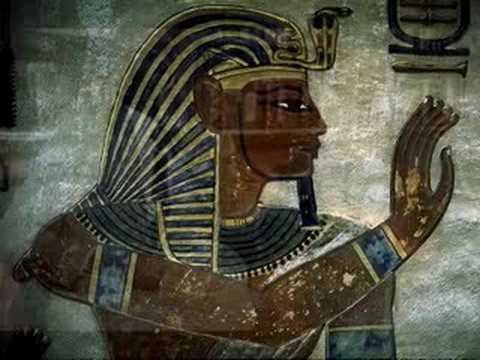
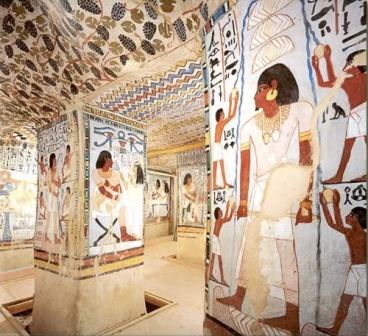
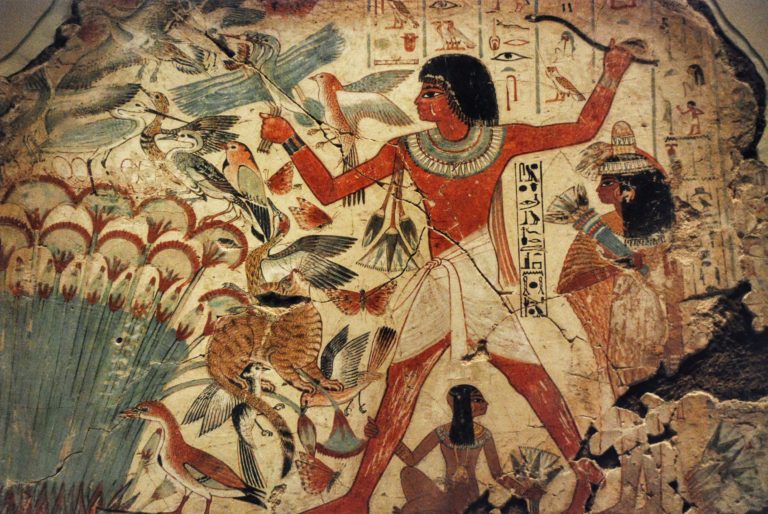
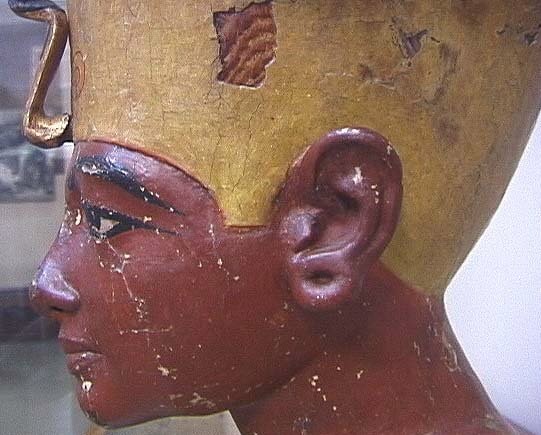
The darker color may seem to depict black skin until one can view Egyptian art that reveals the contrast between themselves being painted reddish-brown and the Nubians, which would be directly south of Egypt and consistently displayed with black skin. The white people with beards in the images below are the Semitic people of Israel or Syria.
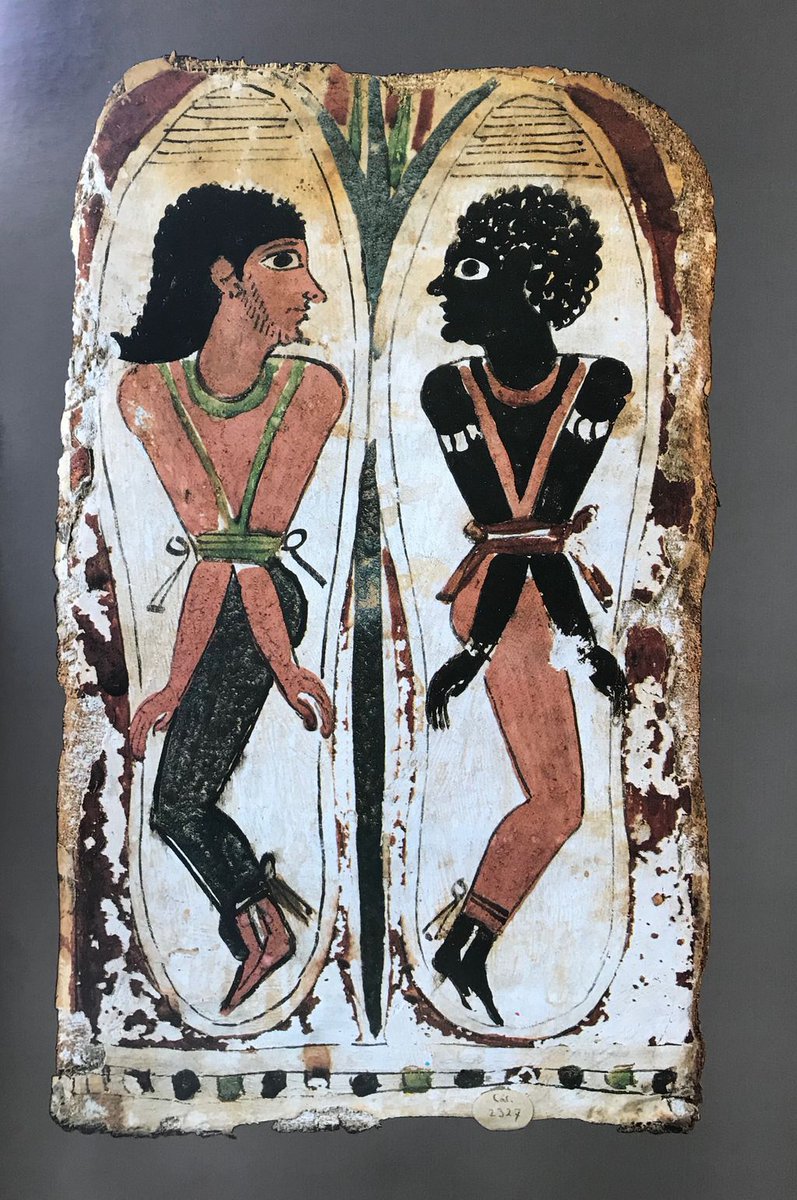
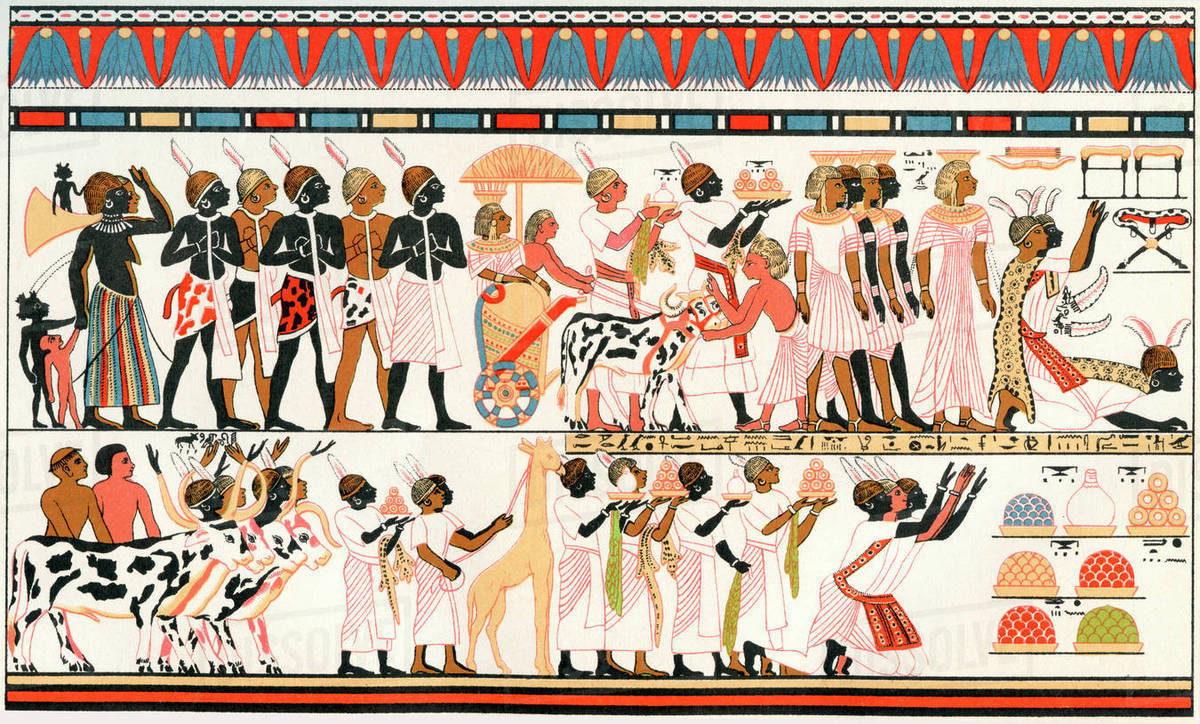
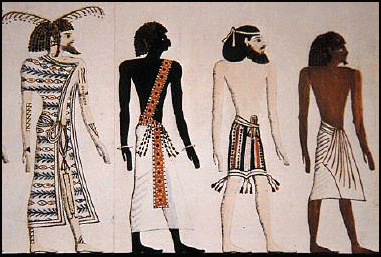
To further expose the deception of Donte Fortson who said, “There’s no evidence of white Egyptians ever existing[,]” the following evidence of white Egyptians proves much of these authors are depending on the readers to be ignorant of history. The fact clearly reveals white Egyptians did exist.
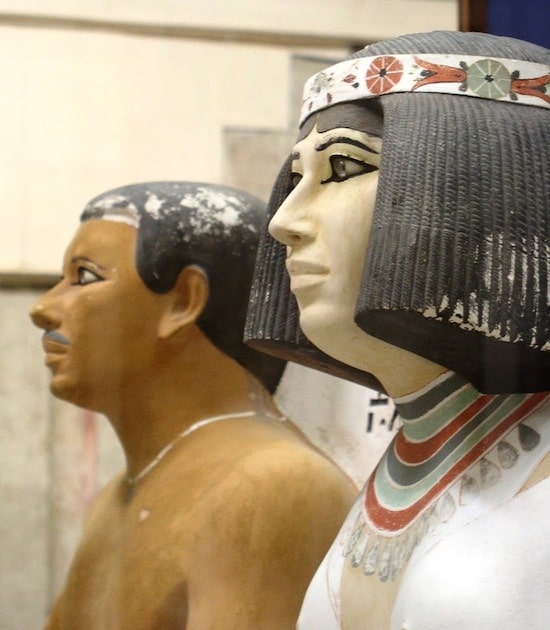
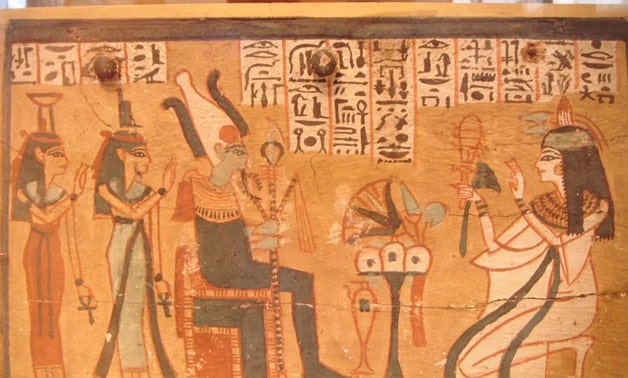
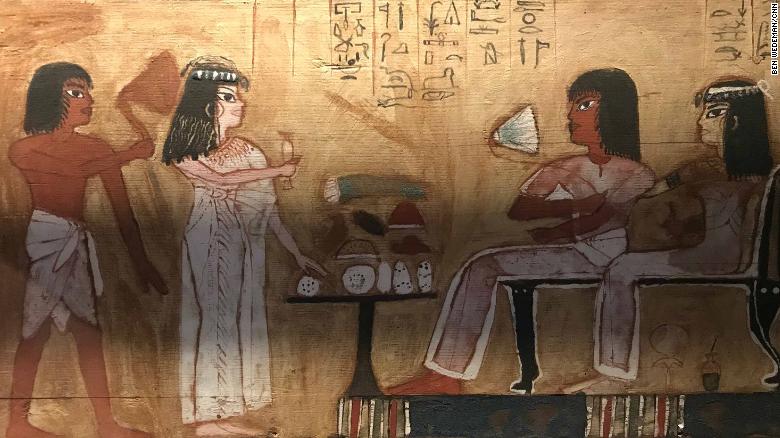
The various shade and tones used by ancient Egyptian art surely shows how they viewed themselves in comparison to the immediate neighbors around them. It seems that the black Jesus historians are selective in what evidence they want their readers to see.
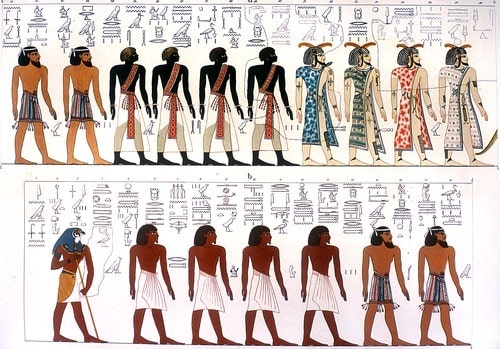
When referencing ancient literature, people need to understand the looseness of the language used by ancient authors. For example, black and white in the ancient world were used as relative terms according to Philo who said, “in point of the fact everything which is not white is black[.]”49)Philo,On Abraham 10; in The Works of Philo: Complete and Unabridged New Updated Version (Trans. C. D. Yonge), (Peabody, MA: 1997), p. 412 This relative expression can be seen as one of Solomon’s wives described herself as black because the sun has tanned her while working in the vineyard (Song of Solomon 1:6). Craig Keener, who writes with an encyclopedic knowledge of the ancient world revolving around the New Testament times, has said, “Ancient Mediterranean literature uses Africa south of Egypt as the standard of blackness for skin.”50) Craig S. Keener, Acts An Exegetical Commentary: Introduction and 3:1-14:28, Baker Academic (Grand Rapids, MI: 2013), Vol. 2, p. 1563 So while Philo can say anything not white is black, the standard for black was represented not as Egyptians, but Nubians. Keener further offers a view that is more sympathetic to the black culture, being married to a woman from Congo, Africa; he has an unbiased perspective to offer. “In all periods, Egyptians appear darker than typical western Asiatics (Semites), such as Syrians[.]”51)Craig S. Keener, Acts An Exegetical Commentary: Introduction and 3:1-14:28, Baker Academic (Grand Rapids, MI: 2013), Vol. 2, p. 1562 Hence the Jews would be portrayed lighter than Egyptians of all historical periods. Keener also discussed the ideals of beauty in Egypt as it was altered over historical periods. “Yet many ancients understood that ideals of beauty varied from one culture to the next. This it was thought that Nubians preferred women as dark as possible and Persians preferred them as light as possible. Scholars often suggest that in ancient Egypt women lightened their skin whereas men darkened theirs. (From my very limited acquaintance with Egyptian artwork, I would guess that this practice was particularly characteristic of Old Kingdom Egypt; where lighter women appear with darker men later, this must be balance with darker women alongside lighter men. The realism of Amarna period artwork may have been short lived, but it suggests that the average complexions for both genders in daily life were reddish brown.)”52) Craig S. Keener, Acts An Exegetical Commentary: Introduction and 3:1-14:28, Baker Academic (Grand Rapids, MI: 2013), Vol. 2, p. 1561 Egypt as a melting pot of skin colors offers no sound argument for those reasoning that Jews hid in Egypt to blend among the black population. The Jews originated from Mesopotamia, which would provide a closer connection with the “Persians” preference of lighter skin in the quote above. The Jews were held as slaves in Egypt for some centuries before God called them out so their culture could be separated from Egypt. In my former post I traced the Jewish complexion through Ancient Mesopotamian literature as the obvious historical antecedent for the Jews,53) See Heath Henning, “What Skin Color was Jesus Christ,” August 3, 2020; https://truthwatchers.com/what-skin-color-was-jesus-christ/ even quoting the Dead Sea Scrolls which indicated the Egyptians saw Abraham’s wife Sarah as beautiful because she was “white,”54) The Genesis Apocryphon, 20.4; The Complete Dead Sea Scrolls In English (Trans. Geza Vermes), Penguin Classics (London, England: 1962, 2004, p. 486 demonstrating the Egyptians liked the lighter skin for women as did the Persians.
There are various proposed origins of the Jewish nation amongst the anti-Semitic ancient historians. The Romans historian Tacitus offers a few theories he was aware of, including they were fugitives from Crete, they were an overflowing population in Egypt, they were from Ethiopia, or Assyria (Tacitus, History 5.2).55)Complete Works of Tacitus (ed. Moses Hadas), Random House (New York, NY: 1942), p. 658 The Egyptians despised much of the Jewish culture, and one of their own historians named Manetho claimed they were lepers expelled from Egypt.56)Josephus, Against Apion, 1.267-277; The New Complete Works of Josephus (Revised and Expanded) (Trans. William Whiston, Introduction and Commentary by Paul L. Maier), Kregel Publications (Grand Rapids, MI: 1999), p. 953-954 This was the theory which Tacitus settles on (History 5.3).57) Complete Works of Tacitus (ed. Moses Hadas), Random House (New York, NY: 1942), p. 658-659 However, according to Manetho the Jews were not derived from Egypt, nor did they mingled together.58)Josephus, Against Apion, 1.278; The New Complete Works of Josephus (Revised and Expanded) (Trans. William Whiston, Introduction and Commentary by Paul L. Maier), Kregel Publications (Grand Rapids, MI: 1999), p. 954 For the black Jesus historians to claim the Jews had originated from Egypt reveals the counterintuitive argument on their behalf as they adopt the anti-Semitic historical revisionist position to promote their view.
Some black Jesus historians have cited Herodotus Histories 2.104 to argue the Egyptians were black. However, there are a few errors in this reference as well. First, if the historical revisionists wanted to take a passage from Herodotus out of context, 2.57 would have been a better selection. By not using this passage simply shows they are not familiar with the sources they are misinterpreting. In 2.57 Herodotus mentions the Dodonaeans who called foreign women “doves” and also “black” which “indicated that the woman was an Egyptian.”59)Herodotus, Histories (trans. George Rawlinson), Alfred A. Knopf (New York, NY: 1997), p. 152 The term “black” for Egypt is not due to their skin color, but “Egypt was called ‘Chemi,’ ‘black,’ from the colour of the rich soil, not from that of the people.”60)footnote 2 in Herodotus, Histories (trans. George Rawlinson), Alfred A. Knopf (New York, NY: 1997), p. 174 In 2.104 he says the Colchians are believed to have descended from the Egyptians, and describes the Colchians as “black-skinned and have woolly hair; which certainly amounts to but little, since several other nations are so too[.]”61)Herodotus, Histories (trans. George Rawlinson), Alfred A. Knopf (New York, NY: 1997), p. 174 Had Herodotus wanted to claim the Jews were black, he could have in the very same paragraph as he mentions them only to connect them with the practice of circumcision. As for what he actually means by black skin, it should again be noted the relativity of the word black since he also mentions a number of Hindu tribes from India being black, “the same tint of skin, which approaches that of the Ethiopians.”62)Herodotus, Histories 3.101; (trans. George Rawlinson), Alfred A. Knopf (New York, NY: 1997), p. 274 Thus, their skin is not as black as the Ethiopians, but merely approaching the tint of blackness. Yet the shade of India is still darker than those from Egypt based on mummies and art work.
To sum up the issues with the Jesus is black opinion: it is predominantly based on inaccurate historical sources (either misinterpreted or purposely altered). The sources cited are rarely, if ever, properly cited with checkable references (this factor seems to confirm a willingness to deceive since it comes in conjunction with altered citations). Furthermore, the evidence presented is extremely selective, slanted toward their biased presupposition. The secondary historical sources are from an era when racism was rampant among historians who sought to prove inferiority of blacks and Jews (which using such historians as support for their position is counterproductive). The primary evidence is structured around indirect arguments about Egypt being black. This is presented as proof by either revising history to assert the Jews were originated from Egyptians, or had to flee into Egypt because they could mix in with the black population. The first assertion of black Egyptians is debunked by the Bible itself which recognizes the origin of the Hebrews from Mesopotamia. If biblical history is rejected then there is essentially no reason to claim Jesus was black as His uniqueness is derived from the Bible. The later argument for black Egyptians shows an ignorance of the historical social setting of Egypt which was a melting pot long before the first century. As my first post on this topic presented clear references to the skin complexion of Jews and their Mesopotamian ancestors, the evidence offered there remains definitive as the true historical answer of this question.
References